




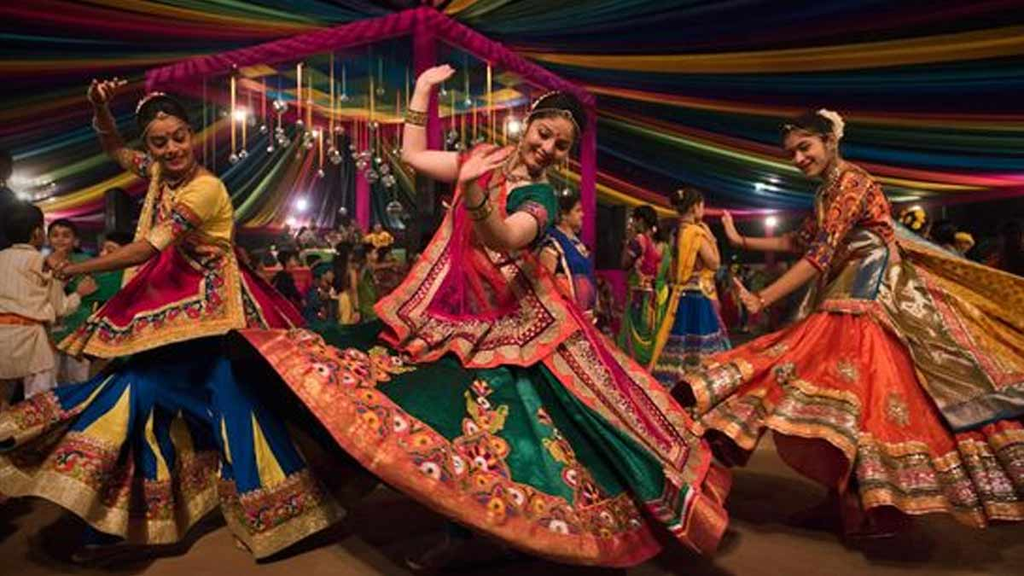
While Dandiya is enjoyed today at community celebrations and cultural events around the world, its roots are deeply connected to the traditions of Gujarat, India.
What Is Dandiya?
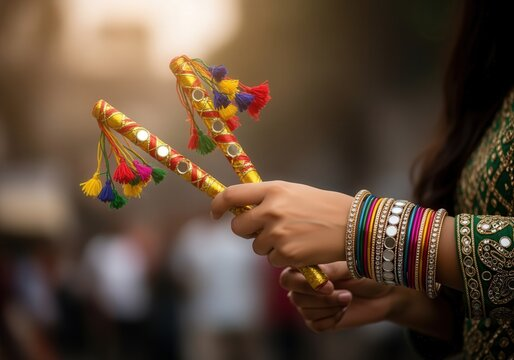
Dandiya, often referred to as Dandiya Raas, is a traditional folk dance from Gujarat. The dance is performed using two decorated wooden sticks, known as dandiyas. Participants move in coordinated patterns while tapping their sticks to the rhythm of traditional or contemporary music.
The dance is usually performed in groups, with participants forming circles or moving in organised formations. Each person follows the rhythm while interacting with the dancers around them, making Dandiya both a dance and a social celebration.
Today, Dandiya has evolved beyond its traditional form. Modern celebrations often combine traditional Gujarati music with Bollywood songs, live performances and DJs, creating an experience that appeals to people of different ages and backgrounds.
When Is Dandiya Celebrated?
Dandiya is most closely associated with Navratri, the nine-night Hindu festival dedicated to the worship of the divine feminine, particularly Goddess Durga and her various forms.
During Navratri, communities gather in the evenings to pray, celebrate and participate in traditional dances such as Garba and Dandiya Raas.
Although the traditions can vary between regions and communities, the festive atmosphere typically grows throughout the nine nights, with people dressing in colourful traditional clothing and gathering in large groups to dance and celebrate.
What Is the Significance of Dandiya?
Dandiya has strong cultural and religious symbolism.
The dance is traditionally associated with the celebration of Goddess Durga and the victory of good over evil. The sticks used in Dandiya are sometimes symbolically connected to the weapons of the Goddess.
The circular movement of the dance also carries symbolic meaning. Participants move together in rhythm, representing unity, continuity and the cycle of life.
At its heart, Dandiya is about coming together. Everyone contributes to the rhythm, and the dance works because participants move together rather than individually. This makes it a powerful expression of community and togetherness.
Dandiya and Garba: What’s the Difference?
Dandiya and Garba are often mentioned together because both are central to Navratri celebrations, but they are different forms of dance.
Garba is traditionally performed without sticks. Dancers move in circular formations, often around a central lamp or symbolic representation of divine energy. The circular movement represents the cycle of life and the continuity of existence.
Dandiya Raas, on the other hand, is performed with two sticks. The rhythmic tapping of the sticks creates an important part of the music and movement.
In modern celebrations, Garba and Dandiya are frequently combined into the same event, creating a lively evening of music, dance and cultural celebration.
How Is Dandiya Celebrated?
A typical Dandiya celebration can be a vibrant and social experience.
The evening may begin with traditional music or performances before participants join the dance floor. Dancers usually carry two decorated sticks and follow a repeating sequence of steps while tapping their sticks with other participants.
The atmosphere is enhanced by:
-
- Traditional Gujarati music and folk songs
-
- Dandiya sticks decorated with colourful designs
-
- Traditional clothing such as Chaniya Choli and Kediyu
-
- Live musicians, singers or DJs
-
- Cultural performances
-
- Food stalls serving Indian and Gujarati-inspired food
-
- Competitions such as Best Dancer or Best Dressed
-
- Community activities and entertainment
Modern Dandiya events can range from small community gatherings to large-scale celebrations featuring hundreds or even thousands of participants.
The Colours and Clothing of Dandiya
One of the most recognisable aspects of Dandiya celebrations is the colourful traditional clothing.
Women often wear Chaniya Choli, a vibrant three-piece outfit decorated with embroidery, mirrors, beads and traditional patterns. Men commonly wear Kediyu, a traditional Gujarati outfit that is often paired with a dhoti or trousers.
Jewellery, accessories and colourful fabrics add to the festive atmosphere.
The clothing is not simply about looking festive-it reflects the rich textile, embroidery and artistic traditions of Gujarat.
Dandiya as a Celebration of Community
Perhaps the most beautiful part of Dandiya is that it is rarely an individual experience.
People dance in groups, follow the same rhythm and constantly interact with the people around them. You may arrive knowing only a few people and leave having danced with many more.
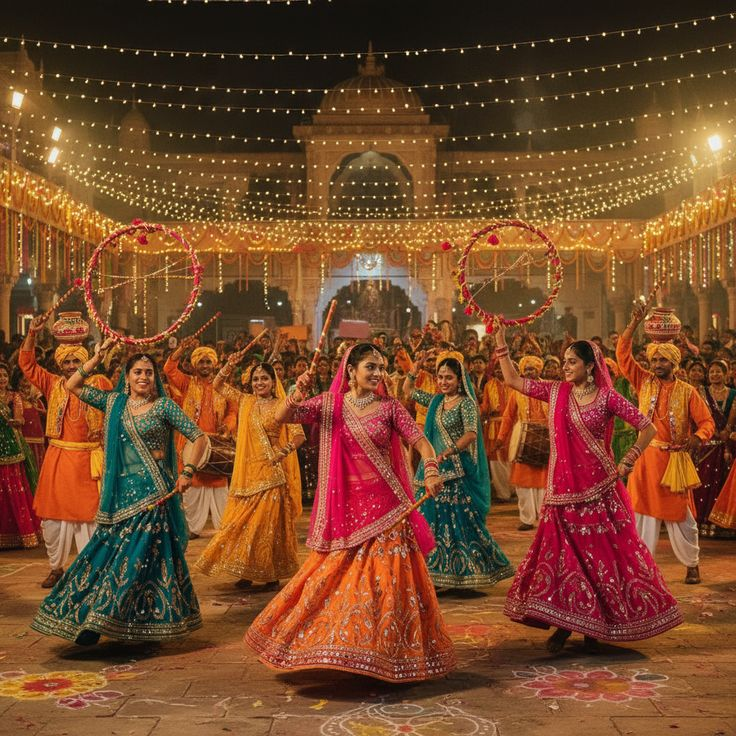
The shared rhythm creates a sense of connection. Different generations can participate together, from children learning their first steps to experienced dancers leading the circle.
This makes Dandiya a celebration that can bring families, friends and entire communities together.
From Gujarat to the World
Although Dandiya has its cultural roots in Gujarat, its popularity has spread far beyond India.
Today, Navratri and Dandiya celebrations take place in cities around the world, including communities across the Middle East, Europe, North America, Australia and Asia.
For the Indian diaspora, these celebrations provide an opportunity to stay connected with cultural traditions while introducing them to younger generations and friends from different communities.
In places like Bahrain, Dandiya has also become part of the multicultural social calendar, bringing together people from different backgrounds through music, dance and food.
More Than a Dance
Dandiya may look like a simple dance of colourful sticks and rhythmic steps, but its meaning goes much deeper.
It represents tradition, devotion, celebration, unity and community.
Every tap of the sticks adds to a shared rhythm. Every circle brings people closer together. And every celebration keeps a cultural tradition alive for another generation.
Whether you have been dancing Dandiya for years or are stepping onto the dance floor for the first time, the spirit remains the same:
Come together. Find the rhythm. Celebrate the culture.
Dandiya is not simply a dance-it is a celebration of togetherness.